Sony demoes flexible electronic paper display

[Site Link].
Filed under Blog | Comment (0)Vote for OUI on Discovery Channel’s best in show!
Discovery Channel has chosen the Daily Planet segment about the work on Organic User Interfaces at Queen’s Human Media Lab into the top 15 best for this year. We’d really appreciate your help voting us into this year’s best of Daily Planet episode. Please vote by selecting “Flexible Computers” in the following webpage, and hitting the submit button, and please tell your friends and facebook buddies to do the same! Voting ends on Monday the 25th of May.
The Daily Planet episode on OUI can be found at: http://watch.discoverychannel.ca/clip162244#clip162244
Filed under Blog | Comment (0)Print issue of June Communications of the ACM online
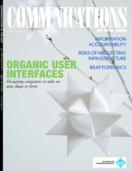
Here is the print edition of the Communications of the ACM Special Issue on Organic User Interfaces. Courtesy of ACM, html versions of the articles have been made freely available at this site, for anyone to enjoy. For a table of contents, please refer to the sidebar on the right.
Filed under Blog | Comments Off